The battle for the city of Stalingrad lasted for 199 days which ended in the Nazi Germany’s defeat. Here are the key days that shape the whole battle.
1941
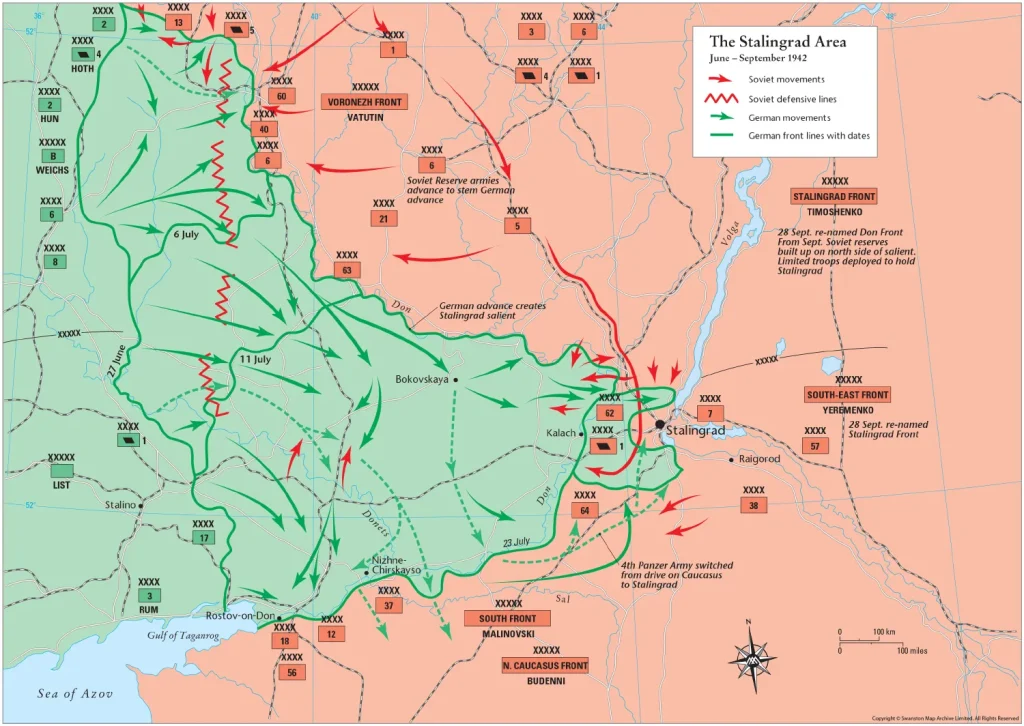
June 22: Hitler launches Operation Barbarossa, invading Russia en route to Stalingrad. The Wehrmacht seizes city after city, fueling Hitler’s confidence.
1942
January 5: Friedrich Paulus replaced von Reichenau as the commander in chief of the Sixth Army after the latter suffered a heart attack.
12 July: Stalin orders the formation of the Stalingrad Front Command under Marshal Timoshenko. The future force to defend Stalingrad city.
17 July: The first clash between the Sixth Army and the newly formed Stalingrad Front Command took place at the Stalingrad outskirts. Marking the official starting point of the Battle of Stalingrad.
23 July: An impatient Hitler shifted Operation Blau from the capture of Moscow to the attack on Stalingrad. The Führer insisted the Soviet Union was near collapse, though several top generals disagreed.
28 July: Stalin Order no. 227 decreed that any Red Army member caught retreating, malingering, or complaining must be shot on the spot; it was famously known as “no one step backwards.” This decree served as the Red Army disciplined backbone for the Battle of Stalingrad.
23 August: Colonel-General Wolfram von Richthofen’s 4th air fleet dropped a thousand tons of bombs into Stalingrad, turning 90% of the city into rubble.
September 12: The Sixth Army entered the city of Stalingrad.
November 16: The temperature in Stalingrad fell to −40°C. The Germans were badly prepared for the Russian winter. They were short of adequate clothing, socks, hand gloves, and head warmers. The sixth army would suffer from cold as much as they would suffer from hunger.
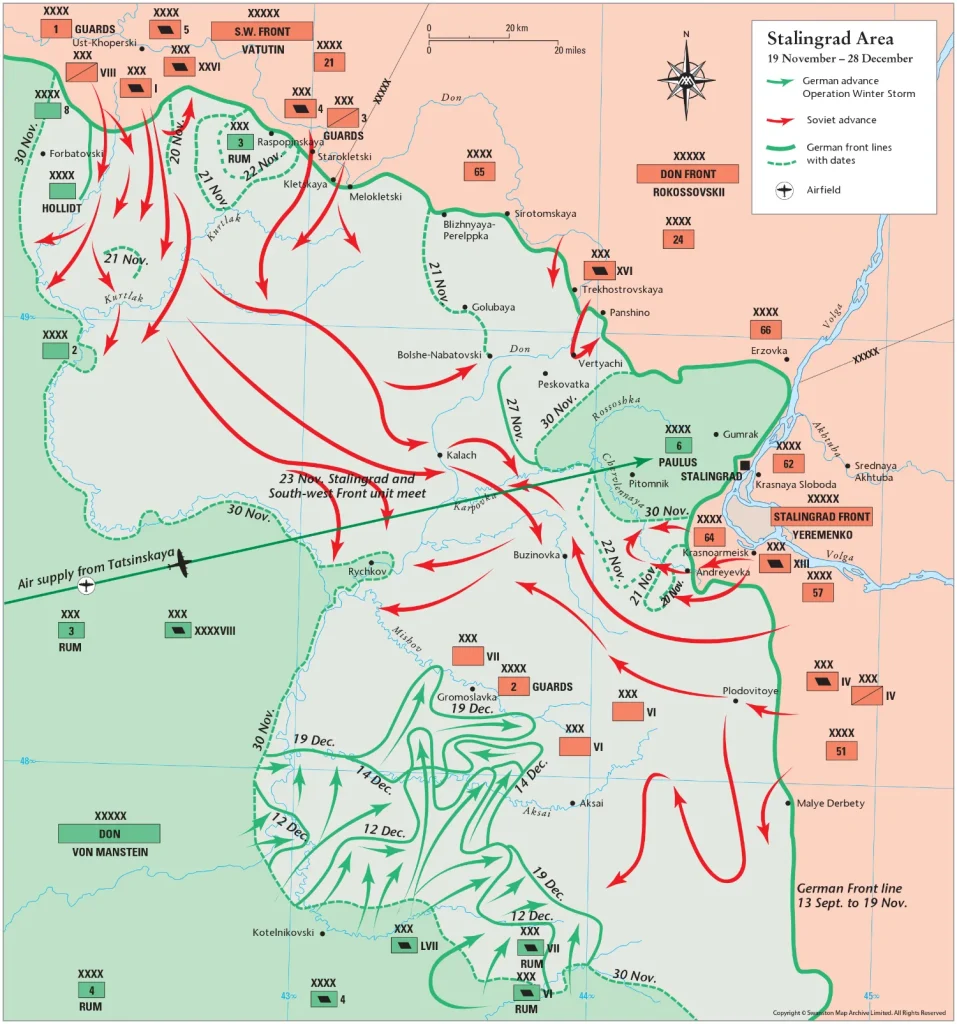
19 November: Operation Uranus is launched, serving as the groundwork for the Soviets to finish off Hitler’s Sixth Army. General Georgy Zhukov assembled two newly equipped tank and motorized corps to attack the Germans on both flanks, aiming to seal the Sixth Army off from the rear. When Paulus found out what the Red Army had done, he still failed to react. Either to break out or to defend.
November 23: The two powerful Red Army forces met at Kalach, completing the encirclement of the Sixth Army. The ring would only get smaller from here.
December 7: Food ration cut dramatically from an already low 200g of bread per day to 100g. Reichs Marshal Hermann Goring Luftwaffe’s promise to supply the encircled Sixth Army fell short throughout the period of Operation Uranus.
December 12: Manstein launched Operation Winter Storm to break out the trapped Sixth Army.
December 16: The Red Army launched Operation Little Saturn.
1943
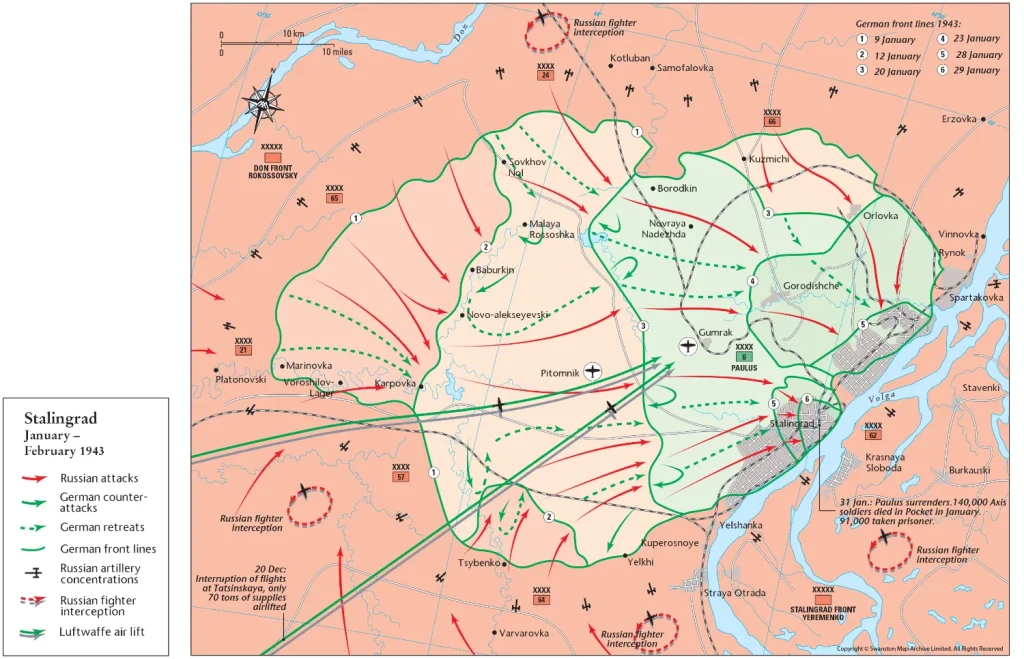
16 January: Pitomnik airfield was lost to the Red Army, thus reducing air supplies and the evacuation of wounded.
7 January: The Soviet high command sent a generous ultimatum of surrender to Paulus twice; it was rejected both times.
10 January: Operation Ring began, the Red Army’s full attack that crushed the already encircled Sixth Army.
22 January: The Red Army successfully destroyed the Gumrak airfield, the only airfield left for supplying the encircled Sixth Army.
22 January: Paulus persuades Hitler to surrender; Hitler rejects.
30 January: Hitler promoted Paulus to field marshal, expecting the field marshal and his men to shoot themselves rather than shame Germany and capitulate. Paulus forbade it outright.
2 February: General Strecker surrenders, effectively ending the Battle of Stalingrad. Stalin celebrated the victory in the Kremlin.

It’s fascinating to see the key dates laid out like this; understanding the timeline really highlights the scale of the Sixth Army’s defeat. I was also researching some related strategic elements and found https://tinyfun.io/game/super-hero-merge offered a different perspective on wartime resource management.
Pingback: Doctor Goebbels: His Life and Death (Summary) - The Book